
Feeling Like Your Age is Getting in the Way of You Getting Hired?

I regularly hear from people who believe their age is hindering their ability to get a new job or a promotion. We all know that age discrimination is illegal. That being said, individual hiring managers may have biases and unfortunately ageism is one.

There are a number of strategies you can use to minimize age being a factor in hiring and promotion decisions. Here are 5 strategies you can employ:

  1. Keep the focus on your past 10 or so years of experience. I promise you that no one cares what you did in the 1990’s. You do not want to come off as if you’re living on your laurels. Hiring managers want to know what you have done recently. You can show earlier work experience in a category called Earlier Work Experience and list your titles, employers, City, ST without including dates. You can, if there’s room, list an accomplishment or two.
  2. Remove graduation dates (if you graduated more than a couple of years ago). If your resume states that you graduated in 1978, for example, the first thing anyone is going to do is the “math” to figure out how old you are.
  3. Ensure you have an updated email address. Your email should be Gmail or something similar. You should not be using AOL or Yahoo for job hunting. AOL especially screams that you got your email 25+ years ago.
  4. Remove content that immediately dates you. Examples include mentioning your success in managing Y2K, have your summary state that you have 25+ years of experience (or even more!), outdated software on your list (WordPerfect, LOTUS 1-2-3, etc.).
  5. Including Objectives and mentioning References on your resume. Hiring managers don’t care what you want (objective); instead, they want to see what you can offer them (professional summary). All hiring managers know that you will provide references if asked; mentioning them on your resume is considered old fashioned.

The above goes for both federal and private sector resumes. If an individual job posting requires something on this list (such as graduation dates), of course you need to include it. But as a general rule, ensuring you are following modern resume standards will help minimize opportunities for you to be eliminated on first glance because the reader makes a negative assumption about your age.

If you’re in need of resume writing assistance, don’t hesitate to contact us!

How To Convert Your Federal Resume To The New 2-Page Style

Thinking about converting your multi-page federal resume to the new 2 page style? The hiring freeze should lift for many agencies in July or so; you’ll want to be ready! Many federal employees’ resumes are 4-6+ pages (the longest I’ve seen is 67 pages and it included footnotes!!). Getting your resume down to 2 pages will take a strategic approach and some effort.

Here are some ideas that might help:

  • Focus on the past 10 years; most resumes these days only go back 10 years or so–no need to include what you did in the 1990s.
  • Edit your training and awards–and think horizontally, rather than vertically. Rather than listing training, certification, awards, and whatever, one to a line, list them horizontally with a pipe or a bullet in between.
  • Be sure to include strong accomplishments (not just duties).
  • Use symbols such as $, M, %, rather than spelling out dollar, million, percent; ditto for using numerals rather than spelling out numbers.
  • Include key words from the postings you’re targeting.
  • Use a .5 margin all around (nothing smaller) and 11-point font (again, nothing smaller) unless the job posting specifies otherwise.
  • Include key words from the new essays that will be required for positions at the GS-5 through 15. It is still unclear whether they essays will apply to current federal employees but it doesn’t hurt to include at least some of the key words.
  • Include required information such as current grade, job series, title, employer, City, ST, hours per week, and supervisor. Again you want to think horizontal, rather than vertical.
  • Recognize that OPM is working on changing USAJOBS (there’s no way to control how many pages your resume is in the current system) so if you’re applying, recommend that you upload your resume rather than use the builder.

These are just some ideas to fit your experience into the new 2 page format. Agencies are supposed to start the transition to the 2 page version at the end of this month with full implementation scheduled for October first (which is closer than it sounds).

The details for the new Merit Hiring Plan are still being fleshed out but there is no reason that you cannot start on your resume re-do today!

If you’re needing further assistance, don’t hesitate to contact us and reach out about our resume writing services.

Is Your Resume Giving the Wrong Impression?

Employers often rely on first impressions when reviewing resumes. A well-crafted resume can make a positive first impression. But certain things on the resume can raise concerns with prospective employers. Are these red flags on your resume?

  • Errors and Inconsistencies. The resume should contain no spelling errors, grammatical mistakes, or inconsistencies in formatting. These kinds of mistakes indicate a lack of attention to detail.
  • Gaps in Employment History. Employers prefer a work history without significant, unexplained gaps.
  • Job-Hopping. While employers aren’t expecting employees to stay in a job forever, a pattern of staying in jobs for a short time (6 months to a year), could indicate a lack of commitment or difficulty adapting to workplace culture.
  • Vague Descriptions of Skills and/or Experience. A generic resume doesn’t help anyone showcase their qualifications.
  • A Focus on Responsibilities, Not Accomplishments. A resume that focuses only on duties and responsibilities suggests that the candidate does the bare minimum and doesn’t make an impact in the workplace.
  • Cliches and Buzzwords. Vague phrases and buzzwords are useless on a resume.
  • Fake Information. Don’t inflate your job title, make up skills, or fabricate accomplishments.
  • Irrelevant Information. Don’t include hobbies or irrelevant extracurricular activities, outdated skills, or marital status on the resume.
  • A Haphazard Career Path. A work history that lists conflicting job titles or an erratic work
  • Your Resume Isn’t Targeted to a Specific Job. A generic resume that is not customized for a specific role can indicate a lack of interest or effort in applying for a position — specifically, that the candidate is mass applying for jobs.
  • Your Resume Goes Back to the 1980’s. Most resumes these days focus on the past 10-12 years; employers want to know what you have done recently.
  • Unprofessional Email Address. While not a major red flag, an email address that is unprofessional (i.e., hotgirl2005@example.com or partyanimal25@example.com) can give the impression that you lack good judgment.

If you have red flags in your employment history, a strong cover letter can help, as can working with a professional resume writer to help you position yourself effectively in your resume. Click here to check out our resume writing services if you need assistance!

Navigating a Sudden Job Loss

Losing a job is often unexpected and almost always jarring. Being resilient, however, is critical. Here are some steps you can take to move forward.

What To Do Immediately:

  • Take a deep breath. When a layoff is unexpected, it can trigger many emotions — including anger, fear, and anxiety. Give yourself permission to feel these emotions, but take a deep breath and recognize that you don’t have to do anything right now.
  • Retrieve all important work documents and files from your employer’s system. If you haven’t already done so, back up your personal files, emails, and documents from work-related accounts. Collect performance reviews, letters of commendation from supervisors and customers, and records of certifications and trainings.
  • Review your severance package (if you were offered one). Carefully go through the details of your severance, including information about your final paycheck, benefits, and unemployment eligibility. Clarify any ethics rules or confidentiality agreements that might affect your job search.
  • File for unemployment benefits. File immediately, as it can take time for approval (and some states have a one-week waiting period). Do a search for “unemployment benefits + (your state)” to find the information you need.
  • Check your health insurance options. If you had health insurance through your employer, you may be eligible to continue your coverage through COBRA. However, that may be more costly than pursuing health insurance through the federal marketplace, available at healthcare.gov), a short-term health insurance plan, or coverage through a spouse’s plan.
  • Pause all automatic payments. Make sure that any subscriptions, memberships, or services that were tied to your work email or credit card are stopped or changed to your personal email and payment method. Cancel anything nonessential. .
  • Refrain from social media rants. Future employers often search for candidates’ social media profiles, so keep yours positive and professional.

What to do in Week 1:

  • Update your job search documents. The first step is to update your resume and LinkedIn profile. Ensure your documents are up-to-date and tailored towards the role you want next. Focus on accomplishments, not standard responsibilities.
  • Reach out to your network. Let your friends, family, and former colleagues know you’re searching for a new job. Networking is one of the best ways to find new opportunities. Connect with them on LinkedIn. Ask past colleagues and supervisors for LinkedIn Recommendations.
  • Consider short-term employment. While searching for your next full-time position, consider freelancing, contract, or gig work to stay financially afloat.
  • Create a budget. One of the most important things to do after a layoff is to stabilize your finances.
  • Set daily goals. Without a work routine to keep you on track, it may be difficult to focus your time. Establish a schedule that includes setting aside specific time each day to complete job applications and network.
  • Join industry-specific groups or forums. Online communities can help connect you with job leads, networking opportunities, and moral support.

The First Month (Solidify Your Job Search)

  • Enhance your skills. Upskill and expand your knowledge. Spend time taking free or affordable online courses that can enhance your employability.
  • Prepare for interviews. The goal is to get in front of an interviewer, so start practicing early. Being well-prepared increases your chances of success in the interview — and being offered the job! Prepare your answers to common interview questions, and record yourself answering questions, or role-play a job interview with a friend or colleague.
  • Differentiate yourself. Assess your online presence. Do you stand out? If not, consider starting a blog, creating an online portfolio, or posting regularly on LinkedIn.
  • Check out job fairs and hiring events. Attend virtual or in-person job fairs where multiple companies and recruiting firms are represented. Practice your introduction — be able to describe yourself effectively in 30 seconds or less. And be prepared to address your job loss — if it comes up, provide a concise, positive explanation. (“I was one of six employees let go when my department was eliminated, but I’m ready to take on a new challenge focusing on my project management and leadership experience.”)
  • Apply consistently. A steady stream of applications increases your chances of securing an interview. Apply for 5-7 jobs every week. Tailor the resume and cover letter to the position you’re applying to. Keep track of the jobs you’ve applied for and follow up with recruiters and hiring managers 7-10 days after applying, when possible.
  • Practice self-care. A job search can be emotionally exhausting. Prioritize your mental and physical health while you are unemployed.

Fact or Myth? What Do You Know About the Modern Job Search?

MYTH: Job postings represent real jobs. Job postings on USAJOBS do not always represent a specific opening. It is critical to read the fine print; you can recognize such jobs when you see language such as: This Public Notice will serve as a resume repository – positions may or may not be filled from this announcement. This is also true of private sector job postings. According to ResumeBuilder, 40% of companies admit to posting fake jobs on job boards in 2024.

MYTH: USAJOBS is an Applicant Tracking Software. USAJOBS is not an ATS; it is a system to collect applications for positions and then forward those applications to the hiring Human Resources office. Real Human Resources personnel read the resumes of qualified applicants.

MYTH: If I know I can do a job, I should apply. You should read the job qualifications; if you don’t have what they’re looking for in terms of skills, education, or number of years of experience, just “knowing” you can do the job is generally not enough. You’ll be competing against people who have all of the qualifications.

MYTH: My resume should reflect everything I have ever done. Most resumes these days only go back 10 years or so. I promise that no one cares what you did in the 1970’s or 80’s. And think about it, who would you rather hire? Someone who is doing it now or someone who hasn’t done in 20 or 30 years?

MYTH: Getting a job is quick. While it is possible to get the first job you apply for, it isn’t that likely. The ease of online applying means that hundreds if not thousands of applications are received for every posting.

MYTH: I can talk my way into a remote job, even if the posting says otherwise. Federal postings clearly articulate whether a job is remote or not; if it’s not listed as remote, do not count on being able to talk the hiring manager into making the job remote just for you (absent a reasonable accommodation). The private sector side has more flexibility but if the posting is specific about how many days per week you are expected to be in an office, believer them. At least until after you have proven yourself.

MYTH: I only need one resume. At a minimum, your resume needs to be tweaked for key words with each application. There is no such thing as a standardized generic resume anymore.

MYTH (sometimes): I need a cover letter. If you’re applying for a federal job and the posting does not require a cover letter, I recommend not providing one. If you’re targeting the private sector then yes, it is considered customary to include one. If you do write a cover letter it needs to be targeted toward the job you’re applying for, use key words, and clearly articulate your qualifications vis-a-vis the job.

These are just a few of the myths that exist about job search. What would you add?

It’s That Time Of Year Again!

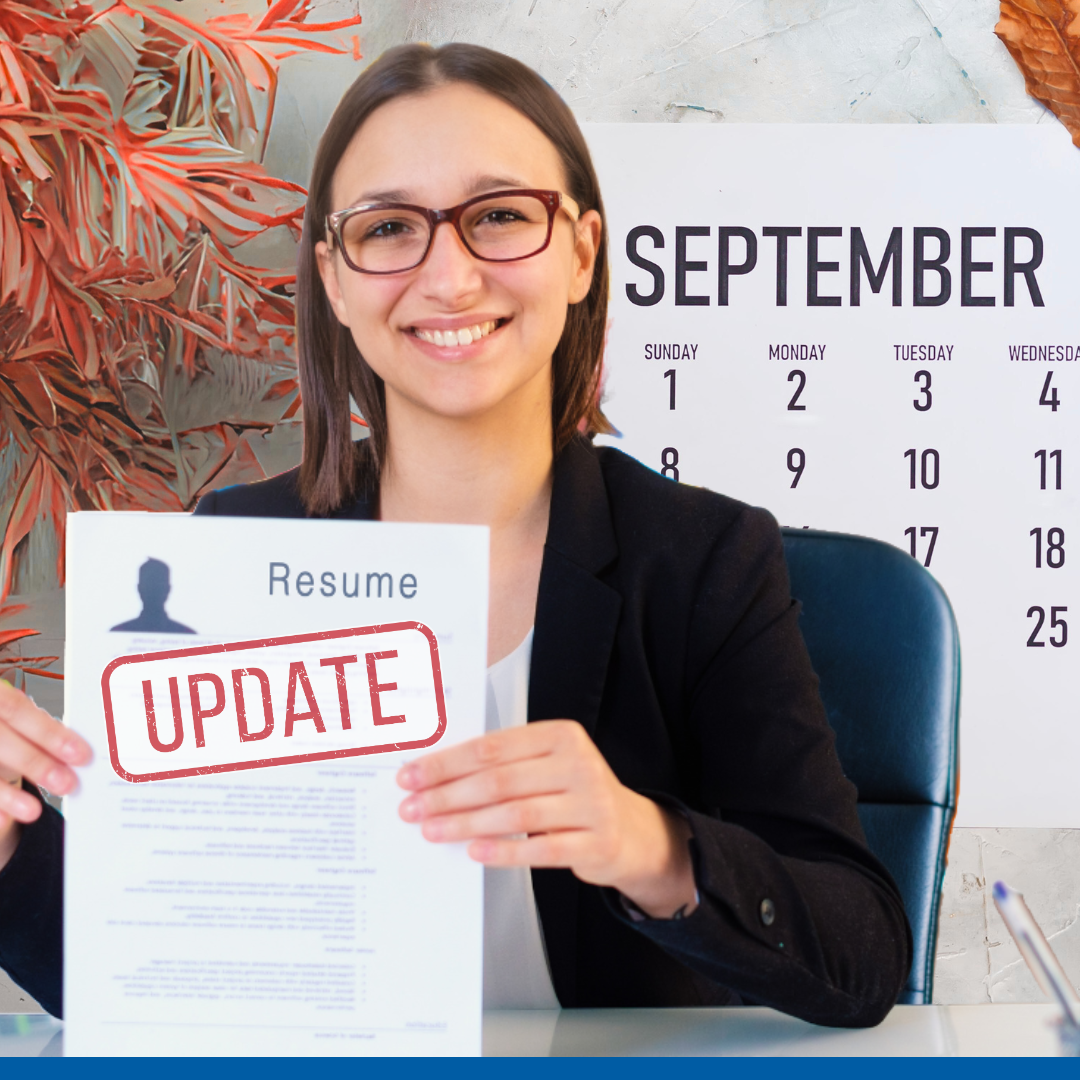
September means that school is starting, along with the fall season. September is also Update Your Resume Month!

Since most careers require a resume in order to gain employment, it’s important that job seekers take a proactive approach in order to be ready for any and all opportunities that come their way. Too often, people try to write their resume at the last minute, which is the worst time to prepare a document that needs to be perfect. A well-crafted resume takes time and research, and Update Your Resume Month is a perfect reminder to be prepared for new opportunities

To update your resume, consider the following:

  • What have you accomplished for your employer? Have you improved efficiency (and if so, by how much?) Complete more than xx number of transactions in a specified timeframe? Have you saved your organization money (and if so, how much)? Etc. If you have written an annual self-assessment or accomplishment report as part of your annual performance evaluation, review that to help you get started.
  • Have you completed a new degree or certification? Or learned new skills?
  • Is your current resume focused on the past 10 years (I promise no one cares what you did in 1980).
  • Have you had a new job since you last updated your resume?
  • Is your resume keyword-rich for the position(s) you’d like to target?
  • Did you check that the dates and titles on your resume are consistent with what you have on LinkedIn?
  • Are acronyms spelled out?
  • Is your resume visually appealing? Readable (font is not too small and neither are your margins)?
  • Do you have both a federal and private sector resume? You never know what opportunities will become available and it’s best to be prepared!

September is the perfect time to think back on the past year of your career and achievements—and get ready for the future. This will you be prepared to maximize your opportunities and take the next step in your career.

To celebrate this time of year, don’t miss out on the opportunity to invest in your professional growth and secure your path to federal job success by using code BACKTOSCHOOL for 10% off our self-paced online training courses by September 30, 2024!